



Published: 2026-10-18

An Integrated Approach to MSI-High Colorectal Cancer Therapy in a Young Patient: A Clinical Case
Innara Turkpenova  , Kaldygul Smagulova , Abay Jumanov , Aisha Moldasheva , Rabiga Kadyrbayeva , Azhar Imanaliyeva
Am J Case Rep 2026; 27:e953248
DOI: 10.12659/AJCR.953248
BACKGROUND:
Colorectal cancer (CRC) is extremely rare in adolescents and often presents with advanced disease because of nonspecific symptoms. Deficient mismatch repair (dMMR) and microsatellite instability-high (MSI-H) are important biomarkers that influence prognosis, treatment selection, and the need for genetic evaluation. We report the case of an adolescent with MSI-H-associated CRC presenting with acute intestinal obstruction.
CASE REPORT:
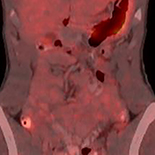
A 16-year-old male initially underwent appendectomy for presumed acute appendicitis. Persistent postoperative bowel obstruction prompted computed tomography (CT), revealing a descending colon tumor requiring emergency Hartmann’s procedure. Histopathology demonstrated mucinous adenocarcinoma, pT4N0M0, with vascular invasion. Immunohistochemistry showed loss of MSH2/MSH6 expression with retained MLH1/PMS2, indicating dMMR and findings highly suggestive of Lynch syndrome, although germline testing was unavailable. Molecular analysis identified a KRAS mutation without NRAS alterations. Given his multiple high-risk features, including T4 disease, bowel obstruction, vascular invasion, mucinous histology, and very young age, he received 12 cycles of adjuvant FOLFOX chemotherapy. Treatment was well tolerated, and he remains disease-free more than 5 years after completion of therapy.
CONCLUSIONS:
This case highlights the diagnostic complexity of adolescent CRC and the need to consider colorectal malignancy in young patients with persistent or atypical abdominal symptoms. Routine MMR/MSI testing and comprehensive molecular profiling are essential in young-onset CRC to identify patients who may have hereditary cancer syndromes and require genetic counseling. Although limited to a single case, this report underscores the importance of multidisciplinary decision-making and individualized treatment based on clinicopathological and molecular characteristics, which may contribute to favorable long-term outcomes.
Keywords: young adult, Colonic Diseases
Related articles (0)
Published: 2026-10-17


Combination of Coronary Artery Bypass Grafting and Autologous CD133 Bone Marrow Stem Cell Therapy in a Pa...
Tri Wisesa Soetisna, Stephanie Wirakarsa, Hillary, Ferdinand Wong, Mark Kevin Devian, Maasa Sunreza Millenia, Vika Kyneissia Gliselda, Amin Tjubandi, Dicky Aligheri, Sugisman, Anwar Santoso, Muchtaruddin Mansyur, Erlin Listiyaningsih
Am J Case Rep 2026; 27:e953693
DOI: 10.12659/AJCR.953693
Published: 2026-10-16

Large Carinal Chondrosarcoma: Resection of the Main Carina, Distal Trachea, and Orifices of the Mainstem ...
Dimitrios I. Viskos, Ioannis P. Pantazis, Fotios F. Danglis, Jubrail I. Dahabreh
Am J Case Rep 2026; 27:e953333
DOI: 10.12659/AJCR.953333