


22 September 2026: Articles 
Ulcerative Bullosis Diabeticorum in a Man With Chronic, Uncontrolled Diabetes, Uncontrolled Erectile Dysfunction, and Significant Social Barriers to Care
Unusual clinical course, Challenging differential diagnosis, Unusual or unexpected effect of treatment, Diagnostic / therapeutic accidents
Alexis Burce ABEF 1, Rediate K. Degu ABEF 1, Linda N. Robles ABCDEF 2*, Maria Munoz-Bramhall ABCDEF 2, Ana Tucker ADEF 1
DOI: 10.12659/AJCR.953149
Am J Case Rep 2026; 27:e953149


Abstract
BACKGROUND: Bullosis diabeticorum (BD) is a dermatologic, often acral, complication of diabetes, with a reported prevalence of approximately 0.16% to 0.5% among diabetic individuals in the United States. This case reports a man whose presentation was atypical in location and severity, progressing to ulceration.
CASE REPORT: A 41-year-old man with a history of poorly controlled type 2 diabetes mellitus (T2DM) complicated by stage II chronic kidney disease and chronic erectile dysfunction presented for ongoing management. His HbA1c values ranged from >14% to 7.8%, often influenced by social determinants. Two months later, he presented with blisters with a non-erythematous base (no surrounding erythema) that were non-painful, non-itchy, non-pruritic, and easily ruptured, forming scabs. The largest wound measured 7.2×3.6×0.1 cm, containing yellow slough, consistent with ulcerative BD. Labs showed elevated albumin-to-creatinine ratio and decreased estimated glomerular filtration rate, a measure of kidney function. Diabetes management included metformin and basal insulin titration, while erectile dysfunction treatment included phosphodiesterase-5 inhibitors. With no signs of infection, wound cultures were not obtained and antibiotic therapy was not initiated. Testing excluded neuropathy and venous-related ulcerations. However, as no biopsy or direct immunofluorescence testing was performed, the diagnosis was clinical, and based on a history of uncontrolled diabetes. Wound care transitioned the patient to twice daily quarter-strength Dakin’s solution moist-to-dry dressings after initial non-adherence. One month later, the patient’s wounds and fasting glucose showed improvement.
CONCLUSIONS: This case highlights the risks of uncontrolled T2DM with complications, particularly when compounded by social determinants.
Keywords: Case Reports, Dermatology, Diabetes Mellitus, Diabetic Neuropathies, Erectile Dysfunction, social determinants of health
Introduction
Bullosis diabeticorum (BD), or diabetic bullae, is a rare and specific dermatologic complication of diabetes, with a reported prevalence of approximately 0.16% to 0.5% among individuals with diabetes in the United States [1]. The condition is classically described by the spontaneous, non-inflammatory onset of tense, painless vesicles or bullae on the skin. BD is most often described in adult men, usually ranging in age from 17 to 84, with long-standing, poorly controlled diabetes, and a male-to-female ratio of 2: 1. The most common locations are acral, including the feet, toes, hands, and forearms. While this condition is usually observed in patients with long-standing, uncontrolled diabetes, there are documented instances in patients with well-controlled or recently diagnosed diabetes, and even in pre-diabetic states [2]. There has not been a consensus on the definition and presentation of BD [3]. Most cases are self-limiting and resolve without scarring within 2 to 6 weeks, but there are documented cases of BD that progress to ulceration [3,4]. One study following 25 patients with BD over multiple years reported a range of 0.5 to 23 months until healing, with a median of 2.5 months [3]. This case adds a description of atypical BD compared with documented presentations, because of the patient’s age, the bilateral shin/knee distribution, and the large ulcerations that improved with wound care treatment.
The primary clinical objective of this case report is to highlight the evaluation and management of atraumatic bullous lesions in patients with diabetes, emphasizing wound care strategies and diagnostic considerations in atypical presentations. This report details the case of a 41-year-old male patient whose presentation of BD was atypical in its location and severity, progressing to significant ulceration. The case was further influenced by comorbid erectile dysfunction (ED) and profoundly impaired social determinants of health. These factors directly influenced disease management and follow-up, beyond the primary features of the case.
Case Report
A 41-year-old man with a significant history of poorly controlled type 2 diabetes mellitus (T2DM), complicated by stage II chronic kidney disease (CKD) and chronic, uncontrolled ED, presented for ongoing management. His glycemic control had been a persistent challenge, with HbA1c values fluctuating between 7.8% and > 14% (measurements over the course of 13 months were: > 14%, 7.8%, 9.8%, 8.5%, and 8.6%). The patient’s current medication was 40 units of glargine nightly, but he reported being unable to afford the increased cost of his insulin that month and borrowing his daughter’s lower dose after running out 2 days prior. He also reported difficulty with obtaining transportation to the clinic.
Upon initial evaluation, the patient’s Body Mass Index was 27.76 kg/m2 (height, 1.753 m or 5′9″; weight, 85.3 kg or 188 lbs). The physical examination was notable for warm skin and well-maintained pedal pulses bilaterally, as well as intact protective sensation in his feet upon monofilament testing. Laboratory results from a few months prior were consistent with an increased risk of CKD diagnosis as evident by albuminuria, revealing a urine albumin-to-creatinine ratio of 150 mg/g. Estimated glomerular filtration rate was 75.2 mL/min/1.73 m2 when measured 2 months before initial evaluation in our clinic, consistent with stage II CKD. The patient had been checking his fasting blood glucose daily, reporting a range of 75 to 220, but mostly above 150. His diabetes regimen was adjusted, initiating metformin 1000 mg tablets twice daily (later switched to extended-release for tolerability) and titrating glargine insulin to 44 units under the skin nightly (100 units/mL pen injection). A coupon was given for glargine, and a degludec sample was also given to the patient in case he was unable to obtain glargine, also at 44 units nightly (200 units/mL, 3 mL, pen injection). For his ED, tadalafil was increased from 5 mg as needed, which was ineffective, to 10 mg daily. The patient was previously on tamsulosin but discontinued it after reporting resolution of urinary symptoms.
At an office visit approximately 2.5 months later, the tadalafil was deemed ineffective and was discontinued. As a replacement, a trial of sildenafil was initiated at 50 mg daily, or 100 mg as needed. The patient declined urology referrals due to transportation barriers. The patient’s HbA1c at this time was 8.6%, below the goal of < 7%. He was still taking the insulin glargine at 40 units nightly but had stopped metformin due to reported diarrhea. Metformin extended-release was started at 500 mg daily, to increase by 1 pill weekly until the goal of 2000 mg was reached (4 tablets with breakfast). During this office visit, the patient reported noticing blisters on his legs for about 1 month (onset 3 months after initial presentation).
His clinical course then shifted, with the development of new, non-painful, non-pruritic blistering lesions, appearing first on his left lower extremity and then the right (Figure 1). The patient reported initially thinking it was due to a “previous broken ankle,” referring to a left tibial fracture for which he had undergone an open reduction and fixation procedure the year before (7 months before initial presentation in our clinic). The bullae, located on his shins and knees, were fragile, prone to easy rupture, and subsequently formed scabs. The patient’s skin was warm, with no pain, erythema, itchiness, or loss of sensation. A clinical diagnosis of BD was made in conjunction with a wound care specialist consultation via telephone call during this visit, and the patient was instructed to dress the wounds with Xeroform gauze to provide microbial coverage and a moist wound-healing environment.
He was referred to and seen by the wound care clinic 1 week later. The patient’s history and presentation raised clinical suspicion for this diagnosis. Upon their evaluation, the wound care specialists identified multiple open ulcerations and intact blisters of varying sizes across his bilateral lower extremities, described as positive for color change, dry skin, and poor wound healing (Figure 2). The largest lesion, on his left anterior lower leg, measured 7.2 × 3.6 × 0.1 cm and contained yellow slough (Figure 2D). The patient admitted to prior non-adherence with the prescribed gauze dressings. His wound care regimen was revised to quarter-strength moist-to-dry dressings twice daily, with quarter-strength Dakin’s solution following saline wound cleansing and application of secondary dressings. Topical lidocaine (4–5%) was used in the clinic for pain control during dressing changes as needed. Additional management included positional offloading and placing a strong emphasis on optimizing glycemic control and nutrition. An arterial duplex with ankle-brachial indices testing was ordered at this visit (4 months after initial presentation) to evaluate for underlying arterial insufficiency, which he was to receive at a follow-up appointment. No debridement was documented during the course of care. At the time of wound evaluation there was an absence of purulence, erythema, warmth, or systemic symptoms. With intact distal pulses, and no clinical signs indicative of infection, no wound cultures were obtained, and antibiotic therapy was not initiated.
A venous duplex study from the previous year had found no reflux. Repeated examinations demonstrated palpable dorsalis pedis pulses with no edema, adequate tissue perfusion, normal range of motion without deformity, and sensation in all 8 tested sites, excluding neuropathic and venous-related ulceration. However, no biopsy or direct immunofluorescence testing was performed; thus the diagnosis remained clinical.
One month after initiating specialized wound care (5 months after initial presentation; the final follow-up visit for which we have records), the patient’s fasting glucose levels showed improvement, settling in the 130s, and the wounds began to show signs of gradual healing (Figure 3). Insulin glargine was increased to 44 units nightly, while the plan to reach the goal of 2 g/day extended-release metformin continued. His ED remained unresponsive to sildenafil 50 mg, even at attempted double dosages. Sildenafil was escalated to 100 mg as needed, and trazodone 50 mg nightly as needed was added for associated anxiety. Following reports of difficulty with urine flow, tamsulosin 0.4 mg daily was initiated for presumed benign prostatic hyperplasia.
Discussion
This case presents a clinical diagnosis of severe, ulcerative BD in a 41-year-old man whose clinical course was influenced by suboptimal glycemic control and socioeconomic barriers. No biopsy or direct immunofluorescence tests were ordered, a diagnostic limitation of this case. It deviates from the typical presentation of BD in a few ways.
First, the patient’s age of 41 is younger than the typical demographic for individuals with T2DM, which is most commonly seen in patients over 45, as prevalence for diabetes mellitus rises with age [5]. One study following 25 BD cases reported the age of most of their patients as between 50 and 70 years of age [3]. Second, the location of the bullae on the shins and knees is atypical compared with the more common acral distribution [1]. Third, and most importantly, the patient’s lesions did not follow a benign or self-resolving course. Instead, they evolved into persistent, extensive ulcerations requiring intensive wound care.
There are not many documented cases of non-acral ulcerative BD. In a study following 25 BD cases, the bullae were commonly found on toes and the dorsal and plantar regions of the feet, ranging in size from 0.5 to 10 cm [3]. Another study documented ulcerations on the left and right elbows, a non-acral distribution similar to this case, with the largest ulcer measuring 6 × 4 cm; comparable to, but smaller than, the largest ulcer in this case (7.2 × 3.6 cm) [4].
Another case that reported BD presenting bilaterally on the legs self-resolved and did not progress to ulceration, but the patient notably had well-controlled diabetes, as well as normal kidney function, urine, and fasting blood glucose tests [6]. While the correlation between glycemic metrics and BD is unclear [1], the comparison between these cases seems to support the influence of blood sugar levels on the progression of BD. Another longitudinal case study in which the patient’s blood glucose level was documented on “50 occasions of bullae occurrence and 50 occasions when bullae were not present” found that it was more likely for bullae to occur when blood sugar levels were elevated [7], which also supports this hypothesis.
The management of our patient’s condition necessitated a departure from the typical symptomatic care for BD. The development of deep, slough-filled ulcerations required escalation to structured and conservative wound care management, including moist-to-dry dressings, and more akin to the treatment of advanced diabetic foot ulcers [3]. Despite the wound presenting with ulceration and yellow slough, there were no clinical signs of infection throughout the patient’s course. There were no wound cultures obtained, and antibiotics were not initiated. Additionally, no debridement was performed, as management remained focused on optimizing the wound environment and glycemic control.
The patient’s persistent challenges with insulin affordability and transportation contributed to difficulties with adhering to treatment, which resulted in elevated hyperglycemia, a known risk factor for nearly all diabetic complications. One study from 2021 showed that 20.4% of US adults with diabetes under the age of 65 ration insulin due to cost [8]. Simultaneously, in the present case, transportation barriers prevented access to specialty care (urology, and potentially more frequent primary care follow-ups) that may have caught his symptoms earlier and optimized management sooner. These social determinants likely influenced the progression of BD in this case.
Conclusions
This case report serves as an example of an atypical bilateral presentation of BD on a patient’s shins and knees, and the risk of progression of a generally self-resolving disease into chronic, non-healing wounds requiring wound care in the setting of poor glycemic control. Although causality cannot be established, it also exemplifies how social barriers can contribute to disease progression and management in patients with poorly controlled T2DM, even in a patient who is younger than typical for the disease. The lesions improved with wound care and decreased fasting blood glucose levels. Clinicians must maintain a high index of suspicion for rare complications in patients with diabetes, escalating to possible wound care treatment or antibiotic therapy as needed. Clinicians might also consider social determinants that could influence the progression of BD as risk factors that warrant a multidisciplinary approach to management, including screening or intervention. Options for interventions include integration of patients into free drug programs or financial aid, or in exploring the prescription of human insulin alternatives with their patients [9].
Figures
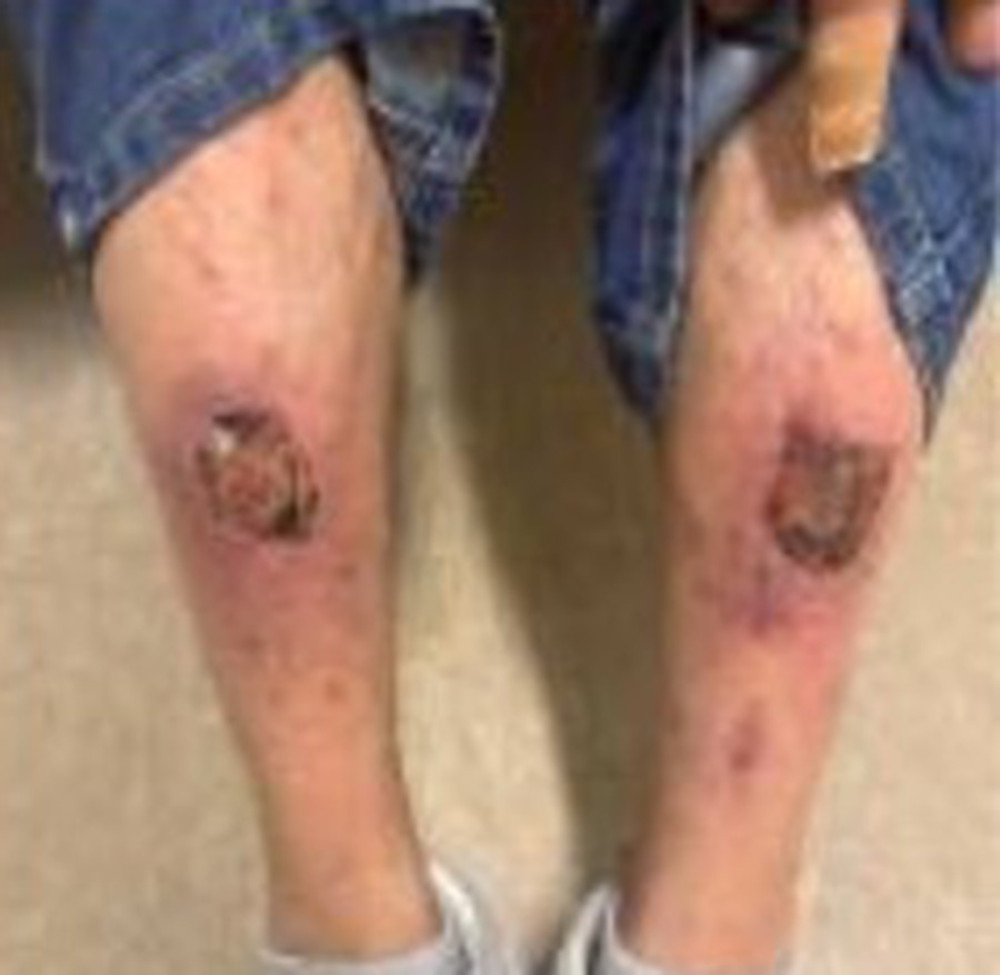 Figure 1. The initial wound presentation in-clinic on the shins of a patient with chronic, uncontrolled type 2 diabetes mellitus. The subacute leg blisters had been ongoing for 1 month.
 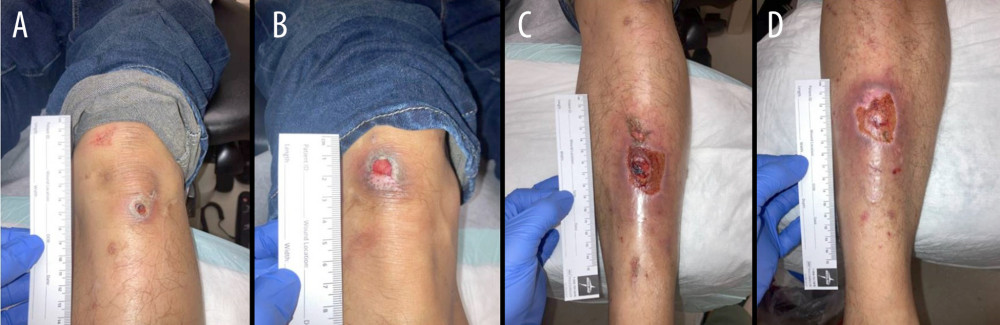 Figure 2. Day 7 after initial presentation, right and left anterior knee and lower leg ulcers. (A) Right anterior knee ulcer showing dry, red tissue. The periwound was dry, intact, and hyperpigmented. Size: 0.9 × 0.8 × 0.1 cm. (B) Left anterior knee ulcer with dry, red tissue. The periwound was dry and hyperpigmented. Size: 0.7 × 1 × 0.1 cm. (C) Right anterior lower leg ulcer with dry, red tissue with red granulation. The periwound was dry and intact, and with blanchable erythema. Size: 3.9 × 3.4 × 0.1 cm. (D) Left anterior lower leg ulcer with red tissue and yellow slough. The periwound was dry and intact, with blanchable erythema. Size: 7.2 × 3.6 × 0.1 cm.
 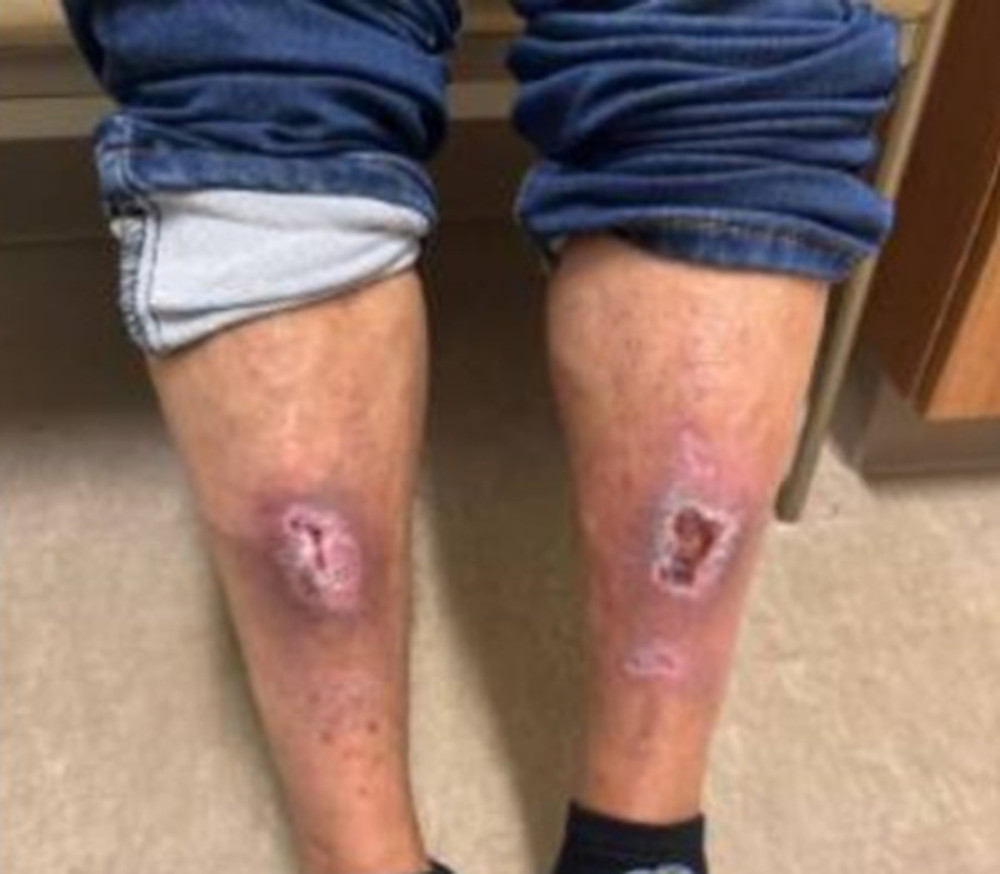 Figure 3. Follow-up image of the patient’s bilateral lower extremity wounds, notably on the anterior knees, at a post–wound-care clinic visit. Partial healing with visible scabbing was evident. The patient continued to follow up with wound care.
 References
1. Chouk C, Litaiem N, Bullosis diabeticorum: StatPearls, 2025, StatPearls Publishing https://www.ncbi.nlm.nih.gov/books/NBK539872/
2. Guarino J, Schwed A, Studdiford J, Salzman B, Bullosis diabeticorum: Consultant360 (website), 2013 https://www.consultant360.com/articles/bullosis-diabeticorum
3. Larsen K, Jensen T, Karlsmark T, Holstein PE, Incidence of bullosis diabeticorum: A controversial cause of chronic foot ulceration: Int Wound J, 2008; 5(4); 591-96
4. Gupta V, Gulati N, Bahl J, Bullosis diabeticorum: Rare presentation in a common disease: Case Rep Endocrinol, 2014; 2014; 862912
5. Goyal R, Singhal M, Jialal I, Type 2 diabetes: StatPearls, 2025, StatPearls Publishing https://www.ncbi.nlm.nih.gov/books/NBK513253/
6. Kansal NK, Anuragi RP, Bullous lesions in diabetes mellitus: Bullous diabeticorum (diabetic bulla): BMJ Case Rep, 2020; 13(8); e238617
7. Southerland CC, Snyder RJ, Wilson TC, Bullosis diabeticorum: Is there a correlation between hyperglycemia and this symptomatology?: Wounds, 2012; 24(12); 350-55
8. Fang M, Selvin E, Cost-related insulin rationing in US adults younger than 65 years with diabetes: JAMA, 2023; 329(19); 1700-2
9. Luo J, Gellad WF, Origins of the crisis in insulin affordability and practical advice for clinicians on using human insulin: Curr Diab Rep, 2020; 20(1); 2
Figures
Figure 1. The initial wound presentation in-clinic on the shins of a patient with chronic, uncontrolled type 2 diabetes mellitus. The subacute leg blisters had been ongoing for 1 month.Figure 2. Day 7 after initial presentation, right and left anterior knee and lower leg ulcers. (A) Right anterior knee ulcer showing dry, red tissue. The periwound was dry, intact, and hyperpigmented. Size: 0.9 × 0.8 × 0.1 cm. (B) Left anterior knee ulcer with dry, red tissue. The periwound was dry and hyperpigmented. Size: 0.7 × 1 × 0.1 cm. (C) Right anterior lower leg ulcer with dry, red tissue with red granulation. The periwound was dry and intact, and with blanchable erythema. Size: 3.9 × 3.4 × 0.1 cm. (D) Left anterior lower leg ulcer with red tissue and yellow slough. The periwound was dry and intact, with blanchable erythema. Size: 7.2 × 3.6 × 0.1 cm.Figure 3. Follow-up image of the patient’s bilateral lower extremity wounds, notably on the anterior knees, at a post–wound-care clinic visit. Partial healing with visible scabbing was evident. The patient continued to follow up with wound care. In Press
Case report 
Am J Case Rep In Press; DOI: 10.12659/AJCR.953317
Case report 
Am J Case Rep In Press; DOI: 10.12659/AJCR.954643
Case report 
Am J Case Rep In Press; DOI: 10.12659/AJCR.954074
Case report
Am J Case Rep In Press; DOI: 10.12659/AJCR.953592
Most Viewed Current Articles
07 Dec 2021 : Case report
28,712,429
DOI :10.12659/AJCR.934347
Am J Case Rep 2021; 22:e934347
06 Dec 2021 : Case report  180,530
DOI :10.12659/AJCR.934406
Am J Case Rep 2021; 22:e934406
21 Jun 2024 : Case report
124,276
DOI :10.12659/AJCR.944371
Am J Case Rep 2024; 25:e944371
08 May 2026 : Case report
95,045
DOI :10.12659/AJCR.952158
Am J Case Rep 2026; 27:e952158