


20 August 2026: Articles 
Paradoxical Role of Glucocorticoids in Severe Pneumocystis jirovecii Pneumonia Among Renal Transplant Recipients: Case Series
Unusual or unexpected effect of treatment
Xiao-Yun Li ABCDEF 1,2, Wen-Xuan Yu ABCDEF 1,2, Xiang-Ru Chen ABCDEF 1,2, Yao Nie ADEF 1,2, Yong-Jun Liu BCDEF 1,2*DOI: 10.12659/AJCR.952853
Am J Case Rep 2026; 27:e952853


Abstract
BACKGROUND: Severe Pneumocystis jirovecii pneumonia (PJP) in renal transplant recipients (RTRs) can rapidly progress to acute respiratory distress syndrome (ARDS) and is associated with high mortality. Glucocorticoids (GCs) play a paradoxical role, constituting a risk factor for infection and a trigger for immune reconstitution inflammatory syndrome upon withdrawal; they may also serve as a therapeutic agent for lung injury. We evaluated the efficacy of a standardized triple-therapy regimen designed to address this paradox.
CASE REPORT: We analyzed 7 RTRs admitted to the intensive care unit (ICU) with severe PJP-ARDS between June 2023 and September 2024. The cohort had a median age of 49 years; all patients had prior chronic low-dose GC maintenance therapy without PJP prophylaxis. All diagnoses were confirmed by metagenomic next-generation sequencing. After the onset of severe PJP-ARDS, all immunosuppressive agents were discontinued; patients were treated with trimethoprim-sulfamethoxazole and caspofungin. Early adjunctive intravenous methylprednisolone was administered to all patients, including 4 who received treatment upon ICU admission. The median starting dose was 80 mg/day (range, 40-120 mg/day), with a median treatment duration of 11 days (range, 5-17 days) and median cumulative dose of 580 mg (range, 200-840 mg). Following this triple-therapy regimen, the median duration of mechanical ventilation was 14 days, and the survival rate was 100% (7/7); no severe secondary infections or uncontrolled hyperglycemia occurred.
CONCLUSIONS: Despite constituting a predisposing factor for PJP, early adjunctive GC administration—combined with robust anti-Pneumocystis therapy—may be a safe and promising strategy for managing severe PJP-ARDS in RTRs.
Keywords: Glucocorticoids, Pneumocystis carinii, Pneumonia, Pneumocystis, transplant recipients
Introduction
Renal transplantation remains the most effective treatment for end-stage renal disease. However, the long-term immunosuppressive regimens required after transplantation, particularly those containing glucocorticoids (GCs), greatly increase the risk of opportunistic infections. In particular,
GCs play a complex and paradoxical role in the pathophysiology and management of PJP, acting simultaneously as a risk factor, a potential trigger of clinical deterioration, and a therapeutic agent. First, as a cornerstone of maintenance immunosuppression, chronic GC administration increases PJP risk in a dose-dependent manner [4]. The concomitant use of other maintenance immunosuppressants, such as calcineurin inhibitors and mycophenolate derivatives, acts synergistically with GCs to profoundly suppress T-cell-mediated immunity. Such overall immunosuppression is a key driver of susceptibility to PJP in this population. Second, clinical observations indicate that many patients develop overt respiratory failure during GC tapering or after discontinuation of pulse therapy [5], suggesting that changes in immunosuppression can trigger disease progression through immune reconstitution inflammatory syndrome (IRIS). Third, adjunctive GC therapy is a standard component of care for human-immunodeficiency-virus (HIV)-associated PJP to reduce the risk of respiratory failure [6,7]. However, its efficacy and safety in non-HIV RTRs remain controversial and inadequately studied.
Here, we aimed to describe the clinical characteristics of RTRs with severe PJP-ARDS and to evaluate the efficacy and safety of a standardized combination treatment protocol comprising trimethoprim-sulfamethoxazole (TMP-SMX), caspofungin, and early adjunctive GC administration.
Case Reports
PATIENT SELECTION AND STUDY DESIGN:
This report describes the clinical course of 7 RTRs admitted to the Department of Critical Care Medicine at The First Affiliated Hospital of Sun Yat-sen University (Nansha Campus) between June 2023 and September 2024. This case series included adult patients who developed severe pneumonia complicated by ARDS after kidney transplantation while receiving maintenance immunosuppression. In all cases, the diagnosis of PJP was confirmed by metagenomic next-generation sequencing (mNGS) of respiratory or blood samples, ensuring diagnostic consistency [8]. Severe PJP was defined by clinically significant hypoxemia, indicated by an alveolar-arterial oxygen gradient of at least 45 mm Hg or an arterial partial pressure of oxygen (PaO2) below 60 mm Hg on room air [9].
DEMOGRAPHICS AND CLINICAL CHARACTERISTICS:
The cohort consisted of 6 men and 1 woman, with a median age of 49.0 years (range, 33–62 years). Infection timing considerably varied, occurring at a median of 5.0 years after transplantation; however, 2 patients developed infection within the first year. Six patients had underlying hypertension, and 1 had diabetes mellitus. At symptom onset, all patients were receiving a standard triple-drug immunosuppressive regimen consisting of GCs, calcineurin inhibitors, and mycophenolate derivatives, with a median prednisone-equivalent dose of 10 mg/day (Table 1). Importantly, no patients were receiving PJP chemoprophylaxis. One patient’s clinical course was particularly notable: PJP-ARDS developed immediately after a course of high-dose pulse methylprednisolone (500 mg/day for 3 days) and plasma exchange for acute graft rejection.
The clinical presentation was acute and relatively uniform across the series. All patients presented with fever, frequently accompanied by progressive dyspnea (71.4%) and dry cough (42.9%). Clinical deterioration was rapid, comprising progression from initial respiratory symptoms to respiratory failure requiring intensive care unit (ICU) admission within a median of 6 days (Table 1).
DIAGNOSIS AND SEVERITY ASSESSMENT:
Upon admission to the ICU, all patients were critically ill. Clinical assessment revealed high disease severity scores, with a median Acute Physiology and Chronic Health Evaluation II (APACHE II) score of 19 and a median Pneumonia Severity Index (PSI) score of 128, placing most patients in high-risk classes IV or V. Radiological evaluation by chest computed tomography consistently demonstrated hallmark features of severe PJP, including bilateral diffuse ground-glass opacities and patchy consolidations.
Laboratory investigations highlighted profound immune depletion and systemic inflammation. Severe lymphopenia was observed (median, 0.3 × 10⁹/L), accompanied by substantially elevated inflammatory markers, including C-reactive protein (median, 117.5 mg/L) and lactate dehydrogenase (median, 442 U/L). Serum 1,3-β-D-glucan levels were also elevated (median, 143.5 pg/mL). Definitive microbiological confirmation was achieved by mNGS in all cases, with P. jirovecii detected in bronchoalveolar lavage fluid from 6 patients and peripheral blood from 1 patient. Concurrent cytomegalovirus (CMV) viremia was identified in 4 of the 7 patients (Table 2).
THERAPEUTIC MANAGEMENT:
After the diagnosis of severe PJP-ARDS, all patients were treated using a standardized triple-therapy protocol. First, to reduce immunosuppression, all antimetabolites and calcineurin inhibitors were discontinued. Second, a comprehensive anti-
Supportive care was intensive. Six patients required invasive mechanical ventilation for a median of 14 days due to severe hypoxemia, and 5 had a PaO2/fraction of inspired oxygen (FiO2) ratio below 100 mm Hg. Vasopressors were required for hemodynamic support in 6 patients, and 3 patients underwent continuous renal replacement therapy (Table 3).
OUTCOMES AND FOLLOW-UP:
Clinical outcomes following this regimen were highly favorable. The cohort achieved a 100% survival rate; 6 patients recovered sufficiently to be discharged home, and 1 was transferred to a local facility for rehabilitation. Median lengths of stay were 18 days in the ICU and 40 days in the hospital (Table 3). Microbiological response was confirmed by follow-up mNGS, which demonstrated complete clearance of P. jirovecii in 6 patients and a substantial reduction in fungal burden in the remaining patient. Regarding safety, the high-dose steroid regimen resulted in transient hyperglycemia requiring insulin therapy in 4 patients (median peak glucose, 13.9 mmol/L); these episodes were readily managed. Importantly, no cases of gastrointestinal hemorrhage, secondary superinfection, or severe electrolyte disturbance were observed.
Discussion
This case series highlights the paradoxical role of GCs in RTRs with PJP, demonstrating that whereas chronic exposure increases susceptibility to infection and withdrawal may precipitate clinical deterioration, early adjunctive administration can be therapeutically beneficial. We successfully managed 7 cases of severe PJP-ARDS in RTRs using a standardized triple-therapy regimen that comprised TMP-SMX, caspofungin, and adjunctive GCs, achieving a 100% survival rate. These outcomes differ from the high mortality typically associated with severe non-HIV PJP [10], suggesting that a treatment strategy with explicit emphasis on the “GC paradox” can substantially improve prognosis. Furthermore, recent studies indicate that solid organ transplant recipients may represent a distinct clinical subgroup with a more favorable prognosis relative to other non-HIV PJP populations [11]. Therefore, understanding the dual role of GCs as both a contributor to infection risk and a modulator of inflammatory lung injury is critical for managing severe cases.
Chronic GC exposure is a major predisposing factor for PJP in RTRs. In the present series, all patients developed PJP while receiving low-dose GC maintenance therapy without PJP chemoprophylaxis. Although current guidelines recommend initiating prophylaxis when the prednisone-equivalent dose exceeds 20 mg/day for at least 4 weeks [4,12,13], the median GC dose in our cohort was below this threshold. Importantly, susceptibility should be considered in the context of the overall immunosuppressive burden rather than GC dose alone. The concomitant use of calcineurin inhibitors and mycophenolate derivatives acts synergistically with GCs to profoundly suppress T-cell-mediated immunity. Mechanistically, GCs increase vulnerability through several complementary pathways, including dose-dependent suppression of CD4+ and CD8+ T lymphocytes [14], downregulation of B-cell effector function in lung tissue [15], and expansion of regulatory T cells accompanied by inhibition of Th1 and Th2 lymphocyte activity [16]. Collectively, these effects create a profoundly immunosuppressed state that increases susceptibility to PJP and is reflected by the severe lymphopenia observed in our cohort.
In patients with non-HIV PJP, GC tapering or discontinuation after pulse therapy frequently precipitates clinical deterioration [5]. This observation suggests that, in immunocompromised hosts with subclinical PJP infection, abrupt GC withdrawal disrupts the pathophysiological equilibrium of “high pathogen burden vs low tissue inflammation” [17,18]. Such a dynamic shift resembles IRIS. Animal studies have shown that GC withdrawal leads to rapid rebound activation of alveolar macrophages [19] and accelerated pulmonary infiltration by CD8+ T cells [20], triggering increased production of proinflammatory cytokines (e.g., tumor necrosis factor-α and interleukin-6) [21] that compromise alveolar-capillary integrity. We acknowledge that, in the absence of serial inflammatory marker measurements or cytokine profiling, the present series lacks biological confirmation of these immune dynamic changes. Therefore, classifying such deterioration as IRIS remains speculative. Although the clinical course is consistent with an IRIS-like mechanism, further investigation is warranted to determine whether these specific pathways underlie clinical worsening in patients with non-HIV PJP.
Regarding therapeutic intervention, our protocol for early adjunctive intravenous methylprednisolone was primarily based on established guidelines for HIV-associated PJP, which recommend initiating GC therapy within 72 hours in patients with severe hypoxemia [6,7]. However, the use of adjunctive GCs in non-HIV PJP populations remains controversial. Although early retrospective studies failed to demonstrate prognostic benefit [22–24], more recent evidence highlights the importance of distinguishing among specific patient subgroups. For example, a recent study indicated that solid organ transplant recipients may represent a distinct clinical population displaying a more favorable baseline prognosis relative to other patients with non-HIV PJP [11]. Conversely, a recent multicenter study showed that higher cumulative doses of adjunctive corticosteroids in cases of non-HIV PJP were independently associated with increased 90-day mortality [25]. After integrating these findings with our results, we propose that the favorable outcomes observed in our cohort are attributable to avoidance of excessive cumulative immunosuppression. By utilizing a targeted, moderate-dose, short-course GC regimen tailored to this solid organ transplant population, we sought to mitigate alveolar injury and modulate excessive inflammatory responses [26]. Additionally, because more than 50% of our cohort had concurrent CMV infection, there was concern that adjunctive GC therapy might exacerbate viral replication. Importantly, concurrent administration of dose-adjusted ganciclovir effectively controlled CMV viremia, suggesting that short-course adjunctive GC therapy can be safely administered without compromising viral control.
The inclusion of caspofungin in our regimen targets the unique biological characteristics of
Several limitations of this study should be acknowledged. The retrospective design, small sample size, and lack of a control group inherently limit the generalizability of our findings and preclude definitive conclusions regarding the independent efficacy of each component of the triple-therapy regimen. Furthermore, given that serial cytokine profiling and longitudinal inflammatory marker measurements were not performed, our discussion of an IRIS-like mechanism remains a speculative clinical hypothesis rather than a biologically confirmed phenomenon. Nevertheless, the uniform application of the treatment protocol and the 100% survival rate achieved in this typically high-mortality population provide a compelling clinical signal. Future prospective multicenter studies are needed to validate our findings and to define the optimal dosing and duration of adjunctive corticosteroid therapy in solid organ transplant recipients.
Conclusions
Chronic low-dose GC therapy increases PJP risk; altered GC exposure may contribute to disease progression through an IRIS-like mechanism. However, definitive anti-
Tables
Table 1. Demographic and baseline characteristics of patients with severe PJP after renal transplantation.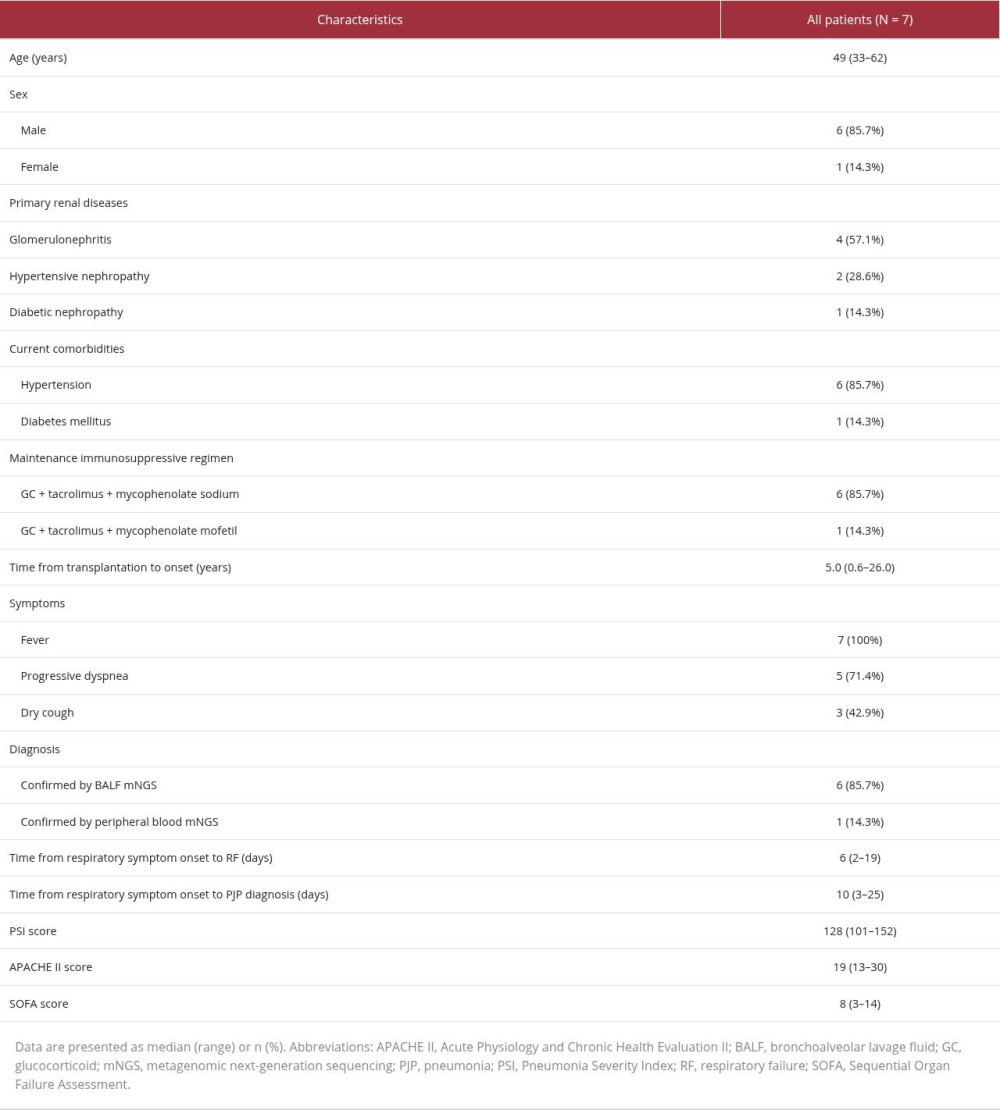 Table 2. Laboratory findings at intensive care unit admission and imaging characteristics.
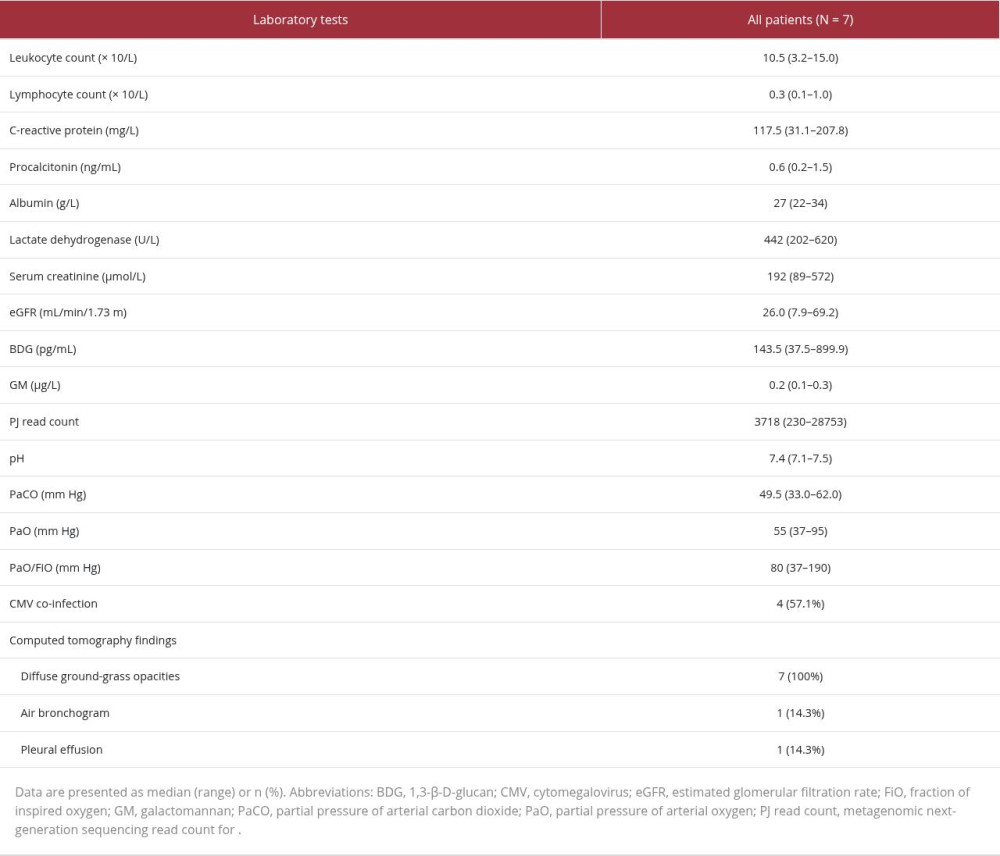 Table 3. Treatment and clinical outcomes of patients with severe PJP after renal transplantation.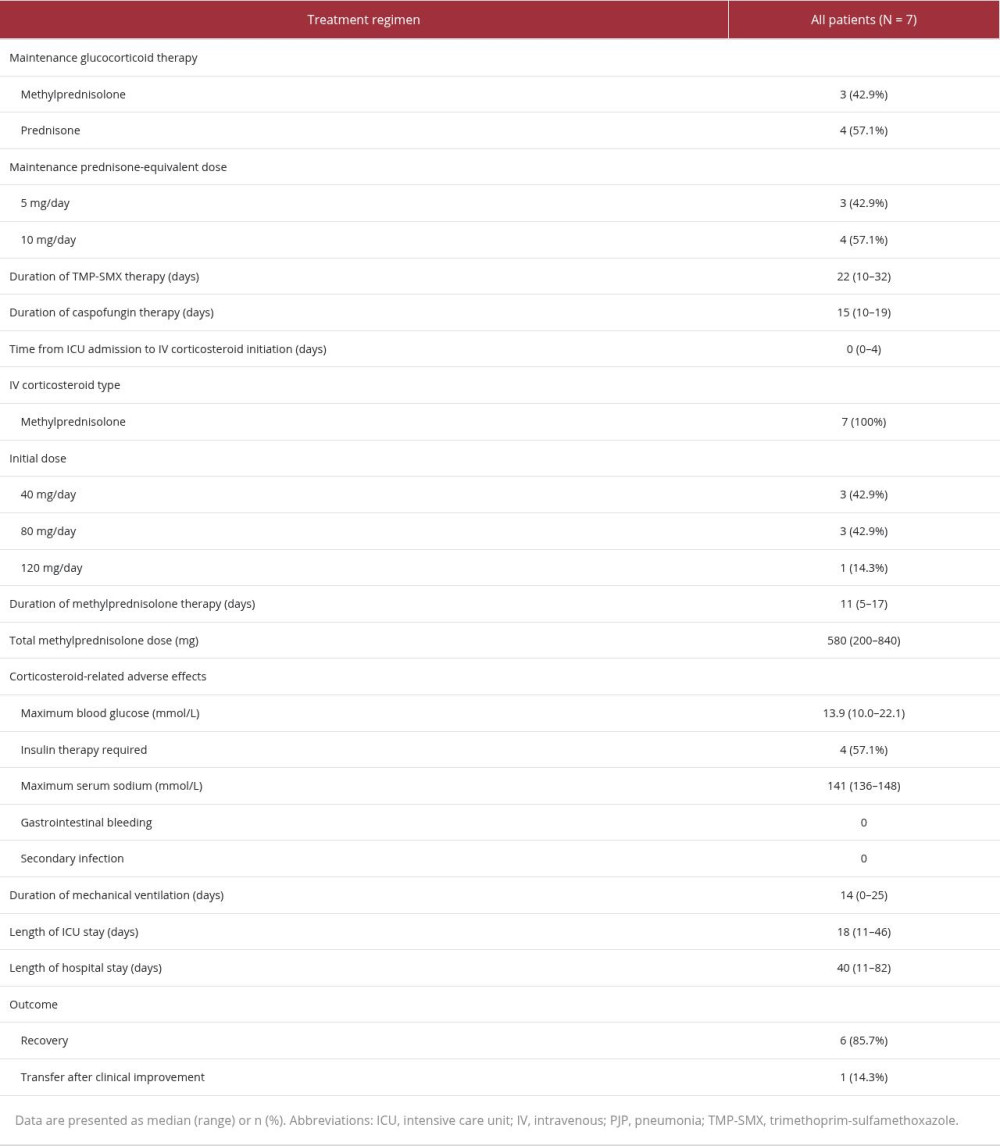
References
1. Zou J, Qiu T, Zhou J: Front Med (Lausanne), 2022; 9; 860644
2. Iriart X, Bouar ML, Kamar N, Berry A, Pneumocystis pneumonia in solid-organ transplant recipients: J Fungi (Basel), 2015; 1(3); 293-331
3. Kim JE, Han A, Lee H: BMC Nephrol, 2019; 20(1); 212
4. Zhao Z, Huang Y, Ming B: Rheumatology (Oxford), 2022; 61(9); 3766-76
5. Chen YH, Fang XY, Li YT: Braz J Microbiol, 2020; 51(3); 1061-69
6. National Institutes of Health-University of California Expert Panel for Corticosteroids as Adjunctive Therapy for Pneumonia: N Engl J Med, 1990; 323(21); 1500-4
7. Ewald H, Raatz H, Boscacci R: Cochrane Database Syst Rev, 2015; 2015(4); CD006150
8. Zou J, Wang T, Qiu T: Transpl Immunol, 2022; 72; 101593
9. Gupta S, Bebell LM: Cleve Clin J Med, 2024; 91(4); 217-19
10. Cilloniz C, Dominedo C, Alvarez-Martinez MJ: Expert Rev Anti Infect Ther, 2019; 17(10); 787-801
11. Pulsipher AM, Thompson E, Vikram HR: Transpl Infect Dis, 2026; 28(2); e70171
12. Baden LR, Swaminathan S, Angarone M, Prevention and treatment of cancer-related infections, version 2.2016, NCCN clinical practice guidelines in oncology: J Natl Compr Canc Netw, 2016; 14(7); 882-913
13. Yale SH, Limper AH: Mayo Clin Proc, 1996; 71(1); 5-13
14. Khalife S, Chabe M, Gantois N: J Eukaryot Microbiol, 2016; 63(3); 309-17
15. Hu Y, Wang D, Zhai K, Tong Z: Am J Respir Cell Mol Biol, 2017; 56(3); 322-31
16. Taves MD, Ashwell JD, Glucocorticoids in T cell development, differentiation and function: Nat Rev Immunol, 2021; 21(4); 233-43
17. Walzer PD, Powell RD, Yoneda K, Rutledge ME, Milder JE: Infect Immun, 1980; 27(3); 928-37
18. Kim P, Aribindi VK, Shui AM, Risk factors for hospital-acquired pressure injury in adult critical care patients: Am J Crit Care, 2022; 31(1); 42-50
19. Lasbury ME, Durant PJ, Bartlett MS: Clin Diagn Lab Immunol, 2003; 10(2); 293-302
20. Sukura A, Konttinen YT, Sepper R, Lindberg LA: Eur Respir J, 1995; 8(5); 701-8
21. Linke M, Ashbaugh A, Demland J: Microb Pathog, 2006; 40(1); 15-22
22. Moon SM, Kim T, Sung H: Antimicrob Agents Chemother, 2011; 55(10); 4613-18
23. Hosseini-Moghaddam SM, Kothari S, Humar A: Am J Transplant, 2024; 24(4); 653-68
24. Wieruszewski PM, Barreto JN, Frazee E: Chest, 2018; 154(3); 636-44
25. Pulsipher AM, Vikram HR, Gotway MB: Chest, 2026; 169(3); 616-25
26. Gharamti AA, Mundo W, Chastain DB: Ther Adv Infect Dis, 2021; 8; 20499361211032034
27. Li H, Lu Y, Tian G: BMC Infect Dis, 2024; 24(1); 152
28. Hu H, Xu S, Jiang W: Clin Case Rep, 2025; 13(8); e70819
Tables
In Press
Case report 
Am J Case Rep In Press; DOI: 10.12659/AJCR.953543
Case report 
Am J Case Rep In Press; DOI: 10.12659/AJCR.954216
Case report
Am J Case Rep In Press; DOI: 10.12659/AJCR.954932
Case report 
Am J Case Rep In Press; DOI: 10.12659/AJCR.954146
Most Viewed Current Articles
07 Dec 2021 : Case report
28,712,695
DOI :10.12659/AJCR.934347
Am J Case Rep 2021; 22:e934347
06 Dec 2021 : Case report  180,721
DOI :10.12659/AJCR.934406
Am J Case Rep 2021; 22:e934406
21 Jun 2024 : Case report
124,419
DOI :10.12659/AJCR.944371
Am J Case Rep 2024; 25:e944371
08 May 2026 : Case report
95,462
DOI :10.12659/AJCR.952158
Am J Case Rep 2026; 27:e952158