


23 August 2026: Articles 
Voriconazole-Induced Pancreatitis Despite Therapeutic Trough Concentrations During Treatment of Disseminated Fusariosis in a Hospitalized Patient
Challenging differential diagnosis, Unusual or unexpected effect of treatment, Unexpected drug reaction, Rare disease
Brunelda Aristilde ABDE 1, Marta E. Berguido de la Guardia DEF 2, Kin F. Fentie EF 1, Michael Evans EFG 3, Libardo Rueda Prada ABCDEFG 3*
DOI: 10.12659/AJCR.953733
Am J Case Rep 2026; 27:e953733


Abstract
BACKGROUND: Invasive fungal infections are a major cause of morbidity and mortality in immunocompromised patients, particularly those with hematologic malignancies. Disseminated fusariosis is a severe fungal infection associated with high mortality and often requires prolonged antifungal therapy. Voriconazole, a triazole antifungal with activity against Fusarium species, is commonly used but is associated with variable pharmacokinetics and potential toxicities. Acute pancreatitis despite therapeutic drug level is a rare adverse effect of voriconazole.
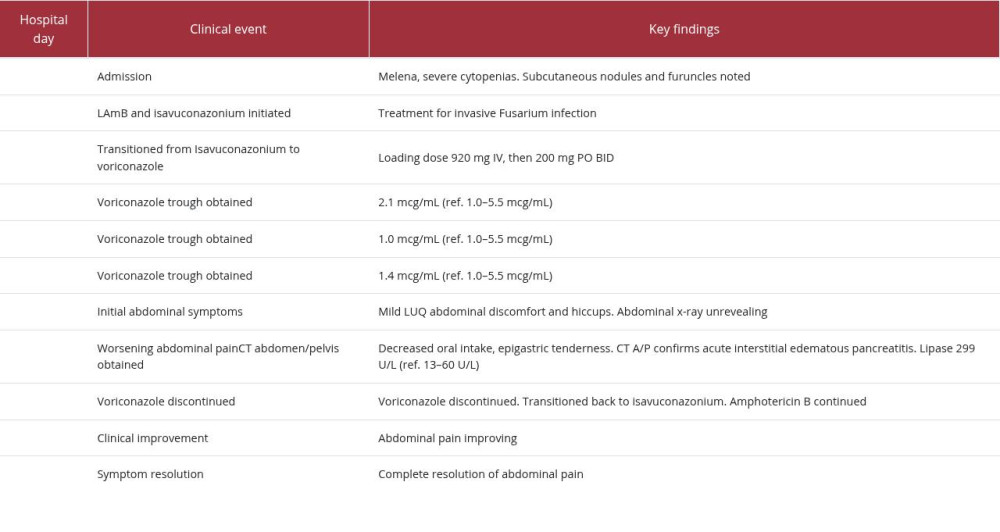
CASE REPORT: We present the case of a 62-year-old man with relapsed myelodysplastic syndrome progressing to acute myeloid leukemia who developed disseminated Fusarium infection confirmed by skin biopsy and culture. He was initially treated with amphotericin B and isavuconazonium, then transitioned to voriconazole for targeted antifungal therapy. After 18 days of therapy, he developed acute epigastric pain and poor oral intake. Evaluation demonstrated acute pancreatitis based on characteristic abdominal pain, elevated serum lipase, and imaging findings consistent with acute interstitial edematous pancreatitis. Alternative etiologies were excluded, including gallstones, alcohol use, hypercalcemia, and severe hypertriglyceridemia. Voriconazole was discontinued due to concern for drug-induced pancreatitis despite therapeutic trough levels between 1 and 2.1 mcg/mL, and antifungal therapy was transitioned back to isavuconazonium while continuing amphotericin B. Symptoms improved within 24 hours and resolved completely within 48 hours following drug discontinuation, supporting a probable diagnosis of voriconazole-induced pancreatitis.
CONCLUSIONS: This case highlights voriconazole-induced pancreatitis as a clinically important adverse event that may occur despite therapeutic drug levels. Early recognition and prompt drug discontinuation can lead to rapid clinical recovery and allow for transition to alternative antifungal therapy.
Keywords: Antifungal Agents, pancreatitis, voriconazole
Introduction
Invasive fungal infections (IFI) are an increasingly common source of morbidity and mortality among immunocompromised patients, especially those with hematologic malignancies [1,2]. Historically aspergillosis, candidiasis and pneumocystosis were the most common IFI, although recent epidemiologic studies suggest a shift toward more resistant organisms such as
Primary treatment recommendations for disseminated fusariosis include voriconazole and/or lipid formulations of amphotericin B (LAmB), followed by maintenance therapy with oral voriconazole [5,7]. However, voriconazole therapy may be complicated by interpatient variability, drug interactions, and hepatic metabolism, influenced by CYP2C19 genetic polymorphisms [8,9]. This can lead to supratherapeutic drug concentrations and adverse events such as hepatotoxicity, visual disturbances, skin reactions, and QTc prolongation [10,11].
Drug-induced pancreatitis accounts for approximately 1% to 3% of cases overall [12,13]. More than 500 medications have been implicated, but with limited capacity to establish causality given the absence of specific clinical, biochemical, or radiologic features that distinguish it from other etiologies [12]. Therefore, diagnosis relies on exclusion of more common causes and identifying a temporal relationship with drug exposure and improvement after discontinuation [12]. Azole-associated pancreatitis has been reported with itraconazole, fluconazole, and posaconazole [13–16]. However, voriconazole-induced pancreatitis appears to be exceptionally rare, with only 2 pediatric cases reported in the literature [17,18] both associated with high voriconazole trough levels.
We present the case of an adult patient with probable voriconazole-induced pancreatitis despite normal therapeutic drug levels in the setting of disseminated fusariosis. Causality was supported by temporality, exclusion of common etiologies, and symptom resolution following drug discontinuation. We aim to increase awareness of this potential adverse effect so that it is not overlooked in clinical practice, particularly among adult patients with hematologic malignancies, in whom gastrointestinal symptoms may be misattributed to a different cause.
Case Report
A 62-year-old man with a past medical history of relapsed myelodysplastic syndrome that has progressed to acute myeloid leukemia, transfusion-dependent due to pancytopenia was initially admitted to the hospital for evaluation of melena in the setting of severe cytopenias.
Upon admission, multiple subcutaneous nodules and furuncles were observed. A skin biopsy revealed an angioinvasive deep fungal infection, and tissue cultures identified
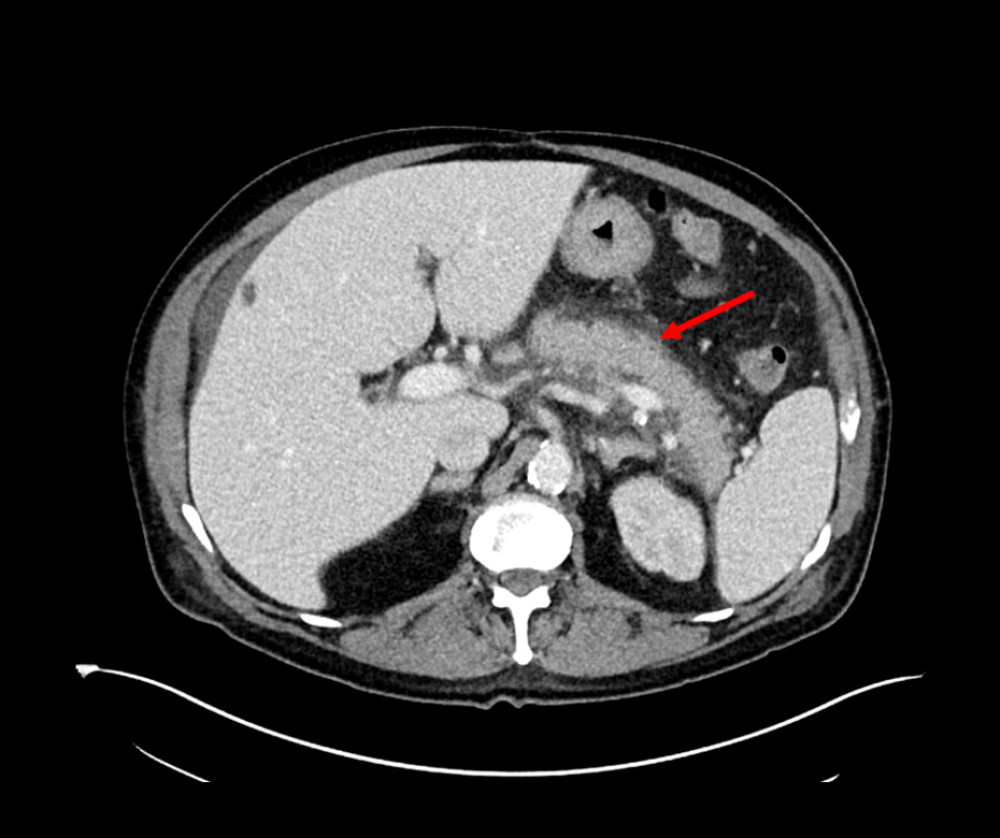
On HD 33, the patient began experiencing mild discomfort in the left upper abdomen, accompanied by intermittent hiccups but without nausea. His vital signs were stable, including a temperature of 36.8 °C, blood pressure of 124/76 mm Hg, and heart rate of 82 beats/min. An abdominal radiograph did not reveal a clear cause of the pain. The next day, his abdominal pain worsened, and oral intake decreased. Physical examination showed epigastric tenderness without guarding or rebound. A CT scan of the abdomen and pelvis revealed acute interstitial edematous pancreatitis, characterized by pancreatic enlargement, peripancreatic stranding, and fluid extending along the paracolic gutters, but without evidence of necrosis or fluid collections (Figure 1). Serum lipase was elevated to 299 U/L (reference range: 13–60 U/L), approximately 5 times the upper limit of normal.
Voriconazole was discontinued on HD 34. The antifungal regimen was transitioned back to isavuconazonium, with amphotericin B continued without interruption. The patient received intravenous fluids, pain management, and supportive care. By the next day (HD 35), abdominal pain had improved and resolved completely by HD 36. No organ failure developed, and the episode was classified as mild acute interstitial edematous pancreatitis.
Alternative causes of pancreatitis were thoroughly investigated. The patient denied recent alcohol use and reported only occasional moderate consumption in the distant past. The triglyceride levels were 355 mg/dL, which is below the threshold typically associated with hypertriglyceridemia-induced pancreatitis. The patient’s BMI was 29.0 kg/m2. Serum calcium was normal at the time of diagnosis. Imaging showed no gallstones or biliary obstruction, and a right upper quadrant ultrasound confirmed these findings and was consistent with known pancreatitis. The gallbladder was absent due to prior surgical removal.
The patient was not receiving any chemotherapy. A detailed review of concomitant medications was performed to assess alternative drug-related etiologies of pancreatitis, including acyclovir, amlodipine, LAmB, doxycycline, fenofibrate, gabapentin, levetiracetam, levofloxacin, lisinopril, loratadine, pantoprazole, and spironolactone. LAmB was started on HD 4 and continued throughout the episode without recurrence of abdominal pain. All other medications were continued throughout the pancreatitis episode without interruption, with no temporal correlation identified between their administration and symptom onset, making them less likely contributors in this case. Liver and renal function tests remained within normal limits during voriconazole therapy.
Using the Naranjo Adverse Drug Reaction Probability Scale, the reaction scored 7, indicating a probable adverse drug reaction. Contributing factors included the temporal relationship between voriconazole exposure and symptom onset, positive de-challenge, exclusion of common etiologies, objective imaging and laboratory testing evidence of pancreatitis, and previously published reports of voriconazole-induced pancreatitis.
Discussion
This report highlights a case of voriconazole-induced acute pancreatitis. The probable causality assessment in this case is supported by the temporal association between voriconazole initiation with symptom onset, improvement after discontinuation, and the careful exclusion of other common etiologies. The patient had no gallbladder or stones due to removal years prior, no history of alcohol use, was not on chemotherapy, and in-hospital examination ruled out biliary obstruction, severe hypertriglyceridemia, hypercalcemia, or significant renal or hepatic dysfunction that could otherwise explain the event [19]. Although he was on several concomitant medications that have been reported in the literature as possible causes of drug-induced pancreatitis, their role in this case appears unlikely given the patient’s improvement despite their continuous administration [12,20]. Of note, this case showed a positive de-challenge; symptoms improved after voriconazole was stopped, even when LAmB, fenofibrate, lisinopril, levofloxacin, and pantoprazole continued. This, along with a Naranjo score that falls within the “probable” range for adverse effects [21], supports voriconazole as the likely causal agent for the symptoms.
Voriconazole is widely used in patients with hematologic malignancies, profound neutropenia, and IFI, all of whom are exposed to multiple potentially toxic medications [20]. In these patients, abdominal pain is frequently attributed to mucositis, gastritis, medication-related nausea, or other gastrointestinal complications of chemotherapy and critical illness [11]. As a result, the diagnosis of pancreatitis may be delayed, especially in rare cases where it is drug-induced. The literature on voriconazole-induced pancreatitis is limited to 2 published cases, both in 16-year-old females [17,18]. Song et al described the case of severe pancreatitis after 35 days of voriconazole therapy for cryptococcal meningitis [17]. Phillips et al described pancreatitis in a patient with AML receiving voriconazole for invasive aspergillosis [18]. Together with the previously published reports, the present case expands existing observations of possible voriconazole-associated pancreatitis by describing an occurrence in an adult patient with therapeutic trough monitoring. Our patient was not receiving chemotherapy or other immunosuppressive therapies at the time of presentation and treatment with voriconazole, which served to reduce the list of potential drug interactions and toxicities.
One of the most clinically important aspects of this case is that pancreatitis occurred despite therapeutic trough levels, suggesting that therapeutic levels do not fully exclude possible drug causation in individual patients. The literature shows that voriconazole displays highly variable pharmacokinetics, resulting in individual serum concentrations that do not always reliably correlate with administered dosage [22]. Thus, studies have supported the use of therapeutic drug monitoring (TDM) via serum trough measurements to maintain an effective concentration and avoid supratherapeutic exposure, which has been consistently linked to toxicity [9,23]. In this case, TDM was used to guide antifungal therapy, and even though serum concentrations remained within the recommended therapeutic range of 1 to 5.5 mcg/mL, pancreatitis still occurred [23]. Recent clinical trial evidence by Veringa et al showed TDM increased the proportion of troughs within the therapeutic range, and although this limits supratherapeutic toxicity, it did not reduce treatment discontinuation from adverse drug reactions [24].
That is where our case differs from previous reports. In the Phillips case, pancreatitis and toxicity occurred only with exposure to higher doses [18]. In the Song case, pancreatitis developed with standard dosing, but the authors still suspected supratherapeutic levels due to liver dysfunction, absent drug monitoring, possible CYP2C19-related impaired metabolism, and prolonged intravenous therapy [17]. However, CYP2C19 genotyping was not performed in this patient; therefore, any contribution remains speculative. Unlike Phillips, who reported concentration-related toxicity, and unlike Song, where elevated levels were suspected but unconfirmed, our case is more unusual because pancreatitis occurred despite within-range trough concentrations.
This case highlights the importance of reassessing antifungal strategies when voriconazole toxicity is suspected. LAmB is an important option because it has broad activity against
We report this case to expand the limited literature on a poorly recognized adverse effect that, to date, has only been described in pediatric patients, and to highlight the complex therapeutic dilemma of discontinuing a potentially life-saving antifungal agent in the setting of a highly lethal IFI. Although definite causality cannot be completely established in a medically complex patient receiving multiple medications, voriconazole remained the most likely etiology based on temporality, de-challenge response. and exclusion of common causes of pancreatitis. Suspicion for voriconazole-associated pancreatitis should be maintained in patients who develop abdominal pain while receiving therapy, particularly in complex hematologic settings where alternative explanations are common. This report is intended to highlight a clinically significant adverse event and does not establish incidence, predictors. or broader population level risk associated with voriconazole therapy.
Conclusions
This case report describes probable voriconazole-induced acute pancreatitis in an immunocompromised patient with disseminated fusariosis and hematologic malignancy. Importantly, pancreatitis developed despite therapeutic voriconazole trough levels, suggesting that toxicity can occur even in the setting of appropriate dosing and therapeutic drug monitoring.
In patients with hematologic malignancies, abdominal symptoms are often multifactorial and may be attributed to infection, chemotherapy, or other medications, which can delay recognition of drug-induced pancreatitis. Although rare, voriconazole should be considered among the potential causes of acute pancreatitis in patients receiving antifungal therapy. Prompt recognition and discontinuation of the offending agent can result in rapid symptom resolution and facilitate transition to alternative antifungal treatment. Additional reports are needed to better characterize the relationship between voriconazole exposure, therapeutic drug levels, and pancreatic toxicity.
References
1. Bhatt VR, Viola GM, Ferrajoli A, Invasive fungal infections in acute leukemia: Ther Adv Hematol Aug, 2011; 2(4); 231-47
2. Shaw KJ, Ibrahim AS, Fosmanogepix: A review of the first-in-class broad spectrum agent for the treatment of invasive fungal infections: J Fungi (Basel), 2020; 6(4); 239
3. Monzo-Gallo P, Teijon-Lumbreras C, Aiello TF, Epidemiological shifts of invasive fungal infections in the current era of haematology: Med Mycol, 2025; 63(8); myaf070
4. Singh N, Trends in the epidemiology of opportunistic fungal infections: Predisposing factors and the impact of antimicrobial use practices: Clin Infect Dis, 2001; 33(10); 1692-96
5. Candoni A, Caira M, Cesaro S, Multicentre surveillance study on feasibility, safety and efficacy of antifungal combination therapy for proven or probable invasive fungal diseases in haematological patients: The SEIFEM real-life combo study: Mycoses, 2014; 57(6); 342-50
6. Nambiar P, Cober E, Johnson L, Brizendine KD, Fatal Fusarium infection manifesting as osteomyelitis following previous treatment with amphotericin B in a multi-visceral transplant: Case report and review of Fusarium infections in solid organ transplantation: Transpl Infect Dis, 2018; 20(3); e12872
7. Nucci M, Anaissie E, Invasive fusariosis: Clin Microbiol Rev, 2023; 36(4); e0015922
8. Hikino K, Shoji K, Saito J, Analysis of factors influencing the relationship between voriconazole plasma concentrations and adverse effects in a paediatric population: Br J Clin Pharmacol Jul, 2025; 91(7); 2020-27
9. Zhang T, Qiu Z, Chu W, Therapeutic drug monitoring of voriconazole: Unbound concentration with clinical efficacy and adverse events: Annals of Pharmacotherapy, 2026; 60(3); 238-47
10. Azanza JR, Mensa J, Barberán J, Recommendations on the use of azole antifungals in hematology-oncology patients: Rev Esp Quimioter, 2023; 36(3); 236-58
11. Ertem O, Tufekci O, Oren H, Evaluation of voriconazole related adverse events in pediatric patients with hematological malignancies: J Oncol Pharm Pract Jun, 2023; 29(4); 861-73
12. Weissman S, Aziz M, Perumpail RB, Ever-increasing diversity of drug-induced pancreatitis: World J Gastroenterol, 2020; 26(22); 2902-15
13. Li D, Wang H, Qin C, Drug-induced acute pancreatitis: A real-world pharmacovigilance study using the FDA adverse event reporting system database: Clin Pharmacol Ther, 2024; 115(3); 535-44
14. Passier JL, van Puijenbroek EP, Jonkers GJ, van Grootheest AC, Pancreatitis associated with the use of itraconazole: Neth J Med, 2010; 68(6); 285-89
15. Tsutsumi Y, Ehira N, Kanamori H, Pancreatitis complications in a patient with myelodysplastic syndrome, who was treated with fluconazole: Int J Clin Pract, 2004; 58(8); 811
16. Pilmis B, Coignard-Biehler H, Rouzaud C, Acute reversible pancreatitis induced by posaconazole: J Antimicrob Chemother, 2017; 72(2); 628-30
17. Song QL, Guan Y, A case of acute pancreatitis induced by voriconazole during treatment of cryptococcal meningitis: Br J Clin Pharmacol, 2022; 88(4); 1925-29
18. Philip A, Sivaprakasam P, Sagar TG, Ganesan P, Voriconazole-induced pancreatitis in a patient of acute myeloid leukemia and invasive aspergillosis: J Pediatr Hematol Oncol, 2012; 34(5); 406
19. Trikudanathan G, Yazici C, Evans Phillips A, Forsmark CE, Diagnosis and management of acute pancreatitis: Gastroenterology, 2024; 167(4); 673-88
20. Wolfe D, Kanji S, Yazdi F, Drug induced pancreatitis: A systematic review of case reports to determine potential drug associations: PLoS One, 2020; 15(4); e0231883
21. Naranjo CA, Busto U, Sellers EM, A method for estimating the probability of adverse drug reactions: Clin Pharmacol Ther, 1981; 30(2); 239-45
22. Dolton MJ, Ray JE, Chen SC-A, Multicenter study of voriconazole pharmacokinetics and therapeutic drug monitoring: Antimicrob Agents Chemother, 2012; 56(9); 4793-99
23. Luong ML, Al-Dabbagh M, Groll AH, Utility of voriconazole therapeutic drug monitoring: A meta-analysis: J Antimicrob Chemother, 2016; 71(7); 1786-99
24. Veringa A, Brüggemann RJ, Span LFR, Therapeutic drug monitoring-guided treatment versus standard dosing of voriconazole for invasive aspergillosis in haematological patients: A multicentre, prospective, cluster randomised, crossover clinical trial: Int J Antimicrob Agents, 2023; 61(2); 106711
25. Kato H, Hagihara M, Asai N, A systematic review and meta-analysis of efficacy and safety of isavuconazole for the treatment and prophylaxis of invasive fungal infections: Mycoses, 2023; 66(9); 815-24
In Press
Case report 
Am J Case Rep In Press; DOI: 10.12659/AJCR.953543
Case report 
Am J Case Rep In Press; DOI: 10.12659/AJCR.954216
Case report 
Am J Case Rep In Press; DOI: 10.12659/AJCR.954932
Case report
Am J Case Rep In Press; DOI: 10.12659/AJCR.954146
Most Viewed Current Articles
07 Dec 2021 : Case report
28,712,695
DOI :10.12659/AJCR.934347
Am J Case Rep 2021; 22:e934347
06 Dec 2021 : Case report  180,721
DOI :10.12659/AJCR.934406
Am J Case Rep 2021; 22:e934406
21 Jun 2024 : Case report
124,419
DOI :10.12659/AJCR.944371
Am J Case Rep 2024; 25:e944371
08 May 2026 : Case report
95,462
DOI :10.12659/AJCR.952158
Am J Case Rep 2026; 27:e952158