


01 September 2026: Articles 
Anterior Cutaneous Nerve Entrapment Syndrome in a 51-Year-Old Woman With Advanced Colon Cancer, Successfully Treated With Repeated Ultrasound-Guided Rectus Sheath Blocks: A Case Report
Challenging differential diagnosis, Unusual setting of medical care
Yoko Shimamoto-Nagahira ABCDE 1*, Ryuichi Nakanuno ABCD 1DOI: 10.12659/AJCR.953662
Am J Case Rep 2026; 27:e953662


Abstract
BACKGROUND: Anterior cutaneous nerve entrapment syndrome is an underrecognized cause of abdominal wall pain and may be overlooked, particularly in patients with advanced cancer, in whom abdominal pain is often attributed to malignancy-related causes. Failure to identify coexisting non-cancer-related pain mechanisms can result in inadequate pain control and functional decline.
CASE REPORT: A 51-year-old woman with advanced sigmoid colon cancer and peritoneal metastasis presented with severe movement-related abdominal pain that was refractory to high-dose opioid therapy. Although tumor lesions were present near the umbilicus, she reported minimal pain at rest, with marked exacerbation during sitting and ambulation. Physical examination revealed multiple localized tender points along the lateral borders of the rectus abdominis muscle and a positive Carnett’s sign, suggesting abdominal wall pain. Based on these findings, anterior cutaneous nerve entrapment syndrome was suspected. Ultrasound-guided bilateral rectus sheath blocks were performed at the tender points, resulting in immediate pain relief. Although the initial analgesic effect was transient, repeated blocks led to sustained pain reduction beyond the expected duration of local anesthetic action, enabling recovery of mobility and activities of daily living.
CONCLUSIONS: This case shows that anterior cutaneous nerve entrapment syndrome can coexist with cancer-related pathology and is a treatable cause of refractory abdominal pain in patients with advanced cancer. Careful assessment of pain characteristics and physical examination, even in the presence of tumor lesions at the pain site, can facilitate recognition and treatment of non-cancer-related pain and improve functional outcomes and quality of life in palliative care settings.
Keywords: Nerve Compression Syndromes, Neuralgia, Palliative Care, trigger points
Introduction
Pain is one of the most prevalent and distressing symptoms in patients with advanced cancer, and its management is a fundamental component of palliative care. Approximately three-fourths of patients with cancer and chronic pain have nociceptive (somatic or visceral) or neuropathic syndromes that are direct effects of the neoplasm and are usually treated with opioid-based pharmacological therapy [1]. Although opioids are effective for many patients, some have persistent pain despite high-dose opioid treatment. In such cases, clinicians should consider alternative or coexisting causes of pain that are not directly related to tumor progression [2,3].
Anterior cutaneous nerve entrapment syndrome (ACNES) is a frequently underrecognized cause of chronic abdominal wall pain resulting from entrapment of the anterior cutaneous branches of the thoracoabdominal nerves as they pass through the abdominal wall. Because ACNES pain ranges from mild to severe and is often sharp or burning, ACNES is frequently misdiagnosed as visceral pain. ACNES can occur in patients with advanced cancer, and its pain can mimic cancer-related abdominal pain, underscoring the importance of including ACNES in the differential diagnosis in this population. Here, we report the case of a 51-year-old woman with advanced sigmoid colon cancer who presented with severe movement-related abdominal pain, which was most likely initially attributed to tumor progression or peritoneal dissemination. A positive Carnett’s sign and the limited efficacy of high-dose opioid therapy suggested that ACNES was a source of the pain. Repeated ultrasound-guided rectus sheath blocks resulted in substantial and sustained pain relief. This case highlights the importance of considering ACNES in the differential diagnosis of abdominal pain, even in patients being treated for advanced cancer.
Case Report
A 51-year-old woman with a history of sigmoid colon cancer presented with severe abdominal pain when sitting up from a supine position or while walking. She had previously undergone surgical resection for sigmoid colon cancer and subsequently developed local recurrence in the sacral region and peritoneal metastasis around the umbilicus (Figure 1). Given the disease progression, she had been receiving best supportive care. She was hospitalized for subileus and abdominal pain due to cancerous peritonitis. After admission, the subileus improved with fasting and placement of an ileus tube, but her abdominal pain remained poorly controlled despite intensive pharmacological pain management. Her analgesic regimen included nonsteroidal anti-inflammatory drugs, mirogabalin at a dose of 30 mg/day, and oral methadone at 60 mg/day. In addition, intravenous patient-controlled analgesia with morphine was administered as rescue medication, with a maximum dose of 700 mg/day (87.5 mg per bolus).
On initial examination after referral to our department, the patient reported only mild abdominal pain while resting in the supine position. However, within a few minutes of assuming a sitting position or shortly after initiating ambulation, she experienced sudden, severe, stabbing pain localized to the umbilical region. This movement-related pain significantly limited her ability to sit upright, walk, and participate in rehabilitation. Physical examination revealed multiple discrete tender points along the lateral borders of the rectus abdominis muscle on both sides of the umbilicus (Figure 2). Palpation of these points reproduced her characteristic pain. Carnett’s sign was positive, as the pain intensified when the abdominal muscles were tensed. Although the tumor was also present near the umbilicus because of peritoneal metastasis, the distribution and nature of the pain suggested abdominal wall pain rather than visceral or cancer-related pain. Based on these findings, ACNES was suspected.
Ultrasound-guided bilateral rectus sheath blocks targeting the identified tender points were performed to confirm the diagnosis and relieve pain (Figure 3). Immediately after a total of 50 mL of 0.25% ropivacaine was injected, the patient experienced complete resolution of pain and was able to maintain a sitting position and ambulate during rehabilitation. Eight hours after the local anesthesia wore off, the analgesic effect of the first block disappeared and the abdominal pain returned. Repeated administration of rectus sheath blocks at the same sites gradually increased the duration of pain relief. The effect of the fifth block lasted for more than 24 hours. Thereafter, these procedures were repeated upon pain flares when requested by the patient. Because the pain had not returned for over 2 months after the ninth block, nerve block treatment was discontinued (Table 1). A total of 9 ultrasound-guided rectus sheath blocks were administered, without any procedure-related complications (Figure 4). Ultimately, she achieved sufficient pain control to perform activities of daily living independently. Multiple analgesics were gradually tapered to oral oxycodone at a dose of 40 mg/day over 2 months, and she was discharged from the hospital.
Discussion
ACNES is caused by entrapment of the anterior cutaneous branches of the thoracoabdominal nerves as they penetrate the abdominal wall fascia, typically near the lateral border of the rectus abdominis muscle. Mechanical irritation of these nerves can cause localized neuropathic pain and hypersensitivity [4,5]. Clinically, ACNES is characterized by a well-localized tender point, pain exacerbated by contraction of the abdominal muscles or changes in posture, and a positive Carnett’s sign [6,7]. Because laboratory and imaging findings are usually unremarkable, the diagnosis relies primarily on clinical examination and is therefore frequently overlooked. Previous studies have reported that abdominal wall pain accounts for a substantial proportion of cases of persistent abdominal pain referred to specialists and is often misdiagnosed as visceral pain [7,8].
Local anesthetic injection at the site of maximal tenderness is widely used in ACNES for diagnostic and therapeutic purposes [9]. Previous randomized controlled trials have demonstrated that trigger point injections with local anesthetics can provide significant pain relief in patients with ACNES [9]. Even if the analgesic effect of a single injection is transient, repeated injections have been reported to result in sustained symptom improvement in some patients [10]. In the present case, while the initial block provided only temporary relief, repeated ultrasound-guided rectus sheath blocks led to gradual and sustained improvement in pain. Although the exact mechanism of this prolonged benefit is not fully understood, repeated blocks may reduce neurogenic inflammation, interrupt pain sensitization, and desensitize the entrapped nerve through repeated blockade [11].
Although there is no evidence-based consensus on the optimal time interval for repetitive nerve blocks in patients with ACNES, several case reports have indicated that such nerve blocks were successfully performed at intervals ranging from 1 day to 2 months, depending on the recurrence of symptoms [12–16]. Our patient was hospitalized because of severe pain, which allowed us to address the recurrence of pain promptly and note her response, enabling us to flexibly adjust the time interval between blocks.
Notably, ACNES occurred in our patient, who was receiving high-dose opioids, including methadone and intravenous morphine, for advanced cancer pain. Despite the escalation of systemic analgesics, her movement-related abdominal pain remained poorly controlled until a local anesthetic was administered. This observation highlights the limitations of systemic pharmacological therapy and the importance of targeted interventional approaches when pain arises from focal peripheral nerve entrapment.
Importantly, the presence of tumor lesions near the painful area does not necessarily indicate that the pain is directly related to malignancy. Abdominal wall pain, such as ACNES, can coexist with cancer-related pain. Failure to recognize this possibility can lead to unnecessary diagnostic investigations and escalation of systemic analgesic therapy. Careful physical examination, including assessment for Carnett’s sign and localized tenderness, is crucial in the evaluation of abdominal pain.
Conclusions
This case demonstrates that ACNES should be included in the differential diagnosis of abdominal pain, even in patients with advanced cancer. Recognition of characteristic clinical findings, together with the use of diagnostic local anesthetic blocks, can support accurate diagnosis and effective treatment, and can improve function and quality of life.
Figures
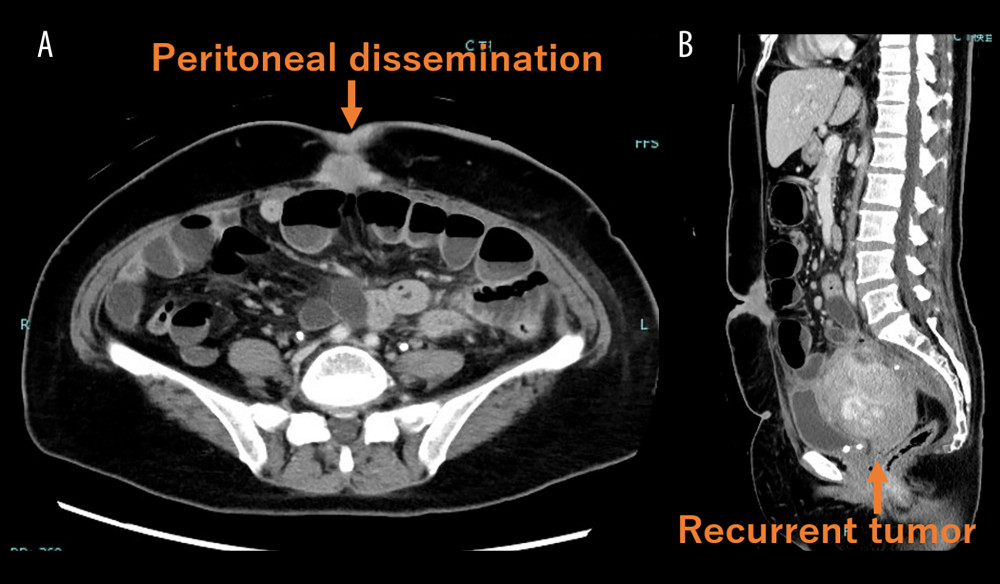 Figure 1. Transverse (A) and sagittal (B) computed tomography images of the abdomen after surgical resection for sigmoid colon cancer, demonstrating peritoneal metastasis around the umbilicus (A) and local recurrence in the sacral region (B).
 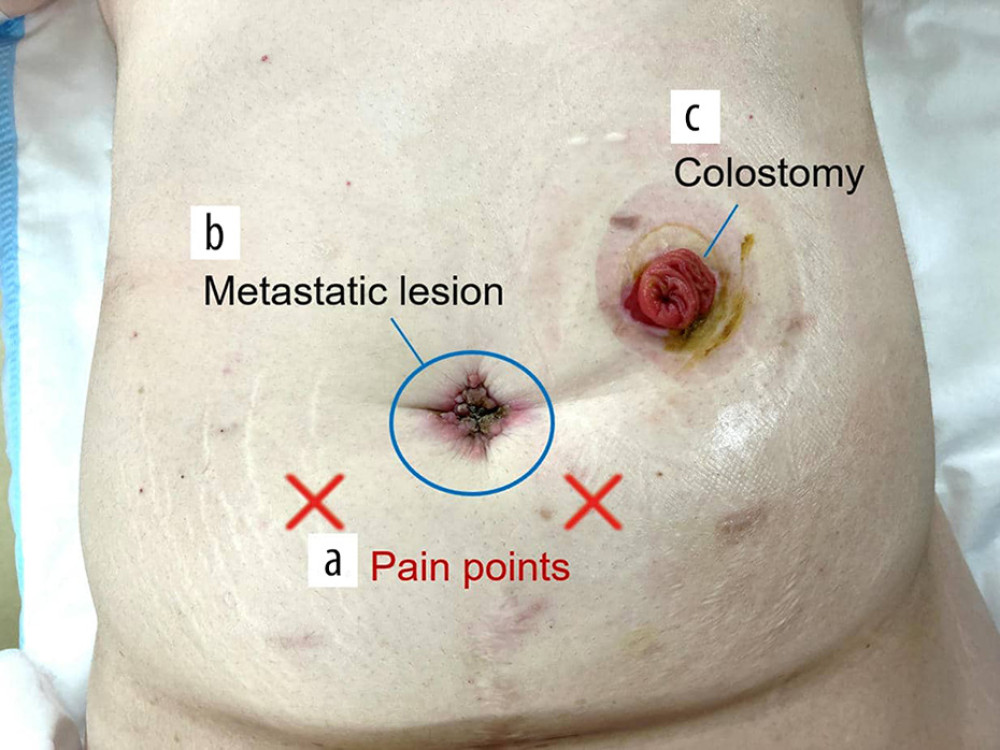 Figure 2. Abdominal inspection findings. a) Pain was localized along the lateral border of the rectus abdominis muscle on both sides of the lower abdomen. The pain was described as stabbing and was exacerbated by movement, particularly during sitting or tensing of the abdominal muscles. b) Peritoneal metastatic lesion around the umbilicus. c) Colostomy on the left side of the abdomen.
 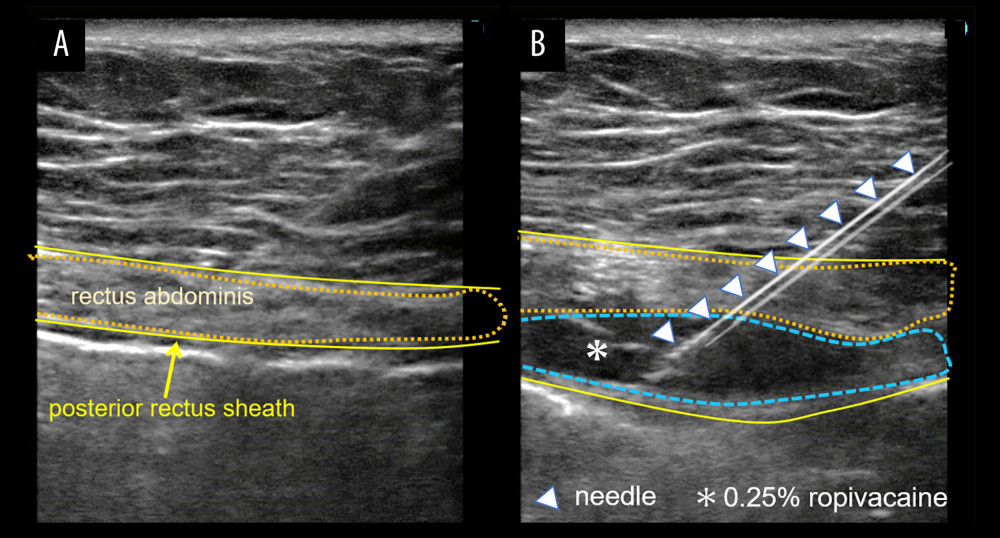 Figure 3. Ultrasound-guided rectus sheath blocks at the points of tenderness. (A) Ultrasound image of the rectus abdominis and posterior rectus sheath. (B) Hydrodissection was performed between the rectus abdominis muscle and the posterior rectus sheath using an in-plane approach from lateral to medial for the rectus sheath blocks.
 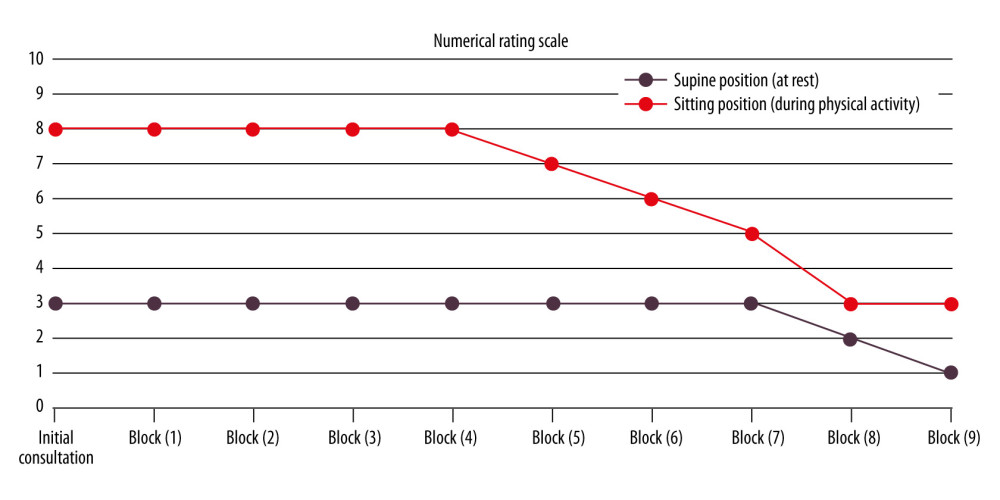 Figure 4. Analgesic effects of repeated rectus sheath blocks. From the first to the fifth injections, pain relief was observed immediately after the procedure but was temporary. Pain recurred to baseline levels as the local anesthetic effect wore off. Between the sixth and ninth injections, pain relief was maintained for at least 24 hours after the blocks.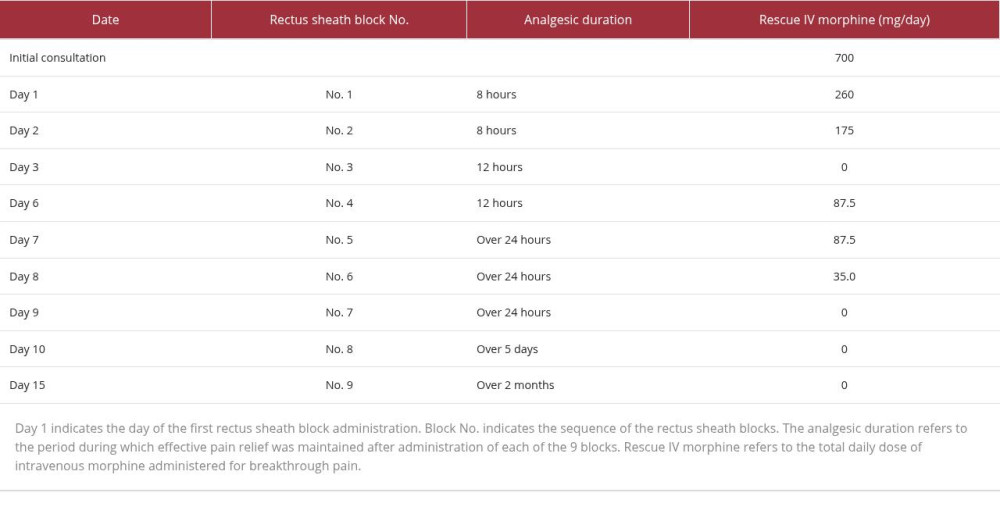
References
1. Cherny NI, Chronic cancer pain syndromes: Oxford Textbook of Palliative Medicine, 2021; 345-63, Oxford, Oxford University Press
2. Paice JA, Portenoy R, Lacchetti C, Management of chronic pain in survivors of adult cancers: American Society of Clinical Oncology clinical practice guideline: J Clin Oncol, 2016; 34; 3325-45
3. , NCCN Guidelines Version 1.2024. Adult Cancer Pain: NCCN Framework: Basic Resources https://www.nccn.org/professionals/physician_gls/
4. Applegate WV, Abdominal cutaneous nerve entrapment syndrome: Surgery, 1972; 71; 118-24
5. Scheltinga MR, Roumen RM, Anterior cutaneous nerve entrapment syndrome (ACNES): Hernia, 2018; 22; 507-16
6. Carnett JB, Intercostal neuralgia as a cause of abdominal pain and tenderness: J Surg Gynecol Obstet, 1926; 42; 625-32
7. Srinivasan R, Greenbaum DS, Chronic abdominal wall pain: A frequently overlooked problem. Practical approach to diagnosis and management: Am J Gastroenterol, 2002; 97; 824-30
8. Lindsetmo R-O, Stulberg J, Chronic abdominal wall pain – a diagnostic challenge for the surgeon: Am J Surg, 2009; 198; 129-34
9. Boelens OBA, Scheltinga MR, Houterman S, Roumen RM, Randomized clinical trial of trigger point infiltration with lidocaine to diagnose anterior cutaneous nerve entrapment syndrome: Br J Surg, 2013; 100; 217-21
10. Oor JE, Ünlü Ç, Hazebroek EJ, A systematic review of the treatment for abdominal cutaneous nerve entrapment syndrome: Am J Surg, 2016; 212; 165-74
11. Boelens OB, Scheltinga MR, Houterman S, Roumen RM, Management of anterior cutaneous nerve entrapment syndrome in a cohort of 139 patients: Ann Surg, 2011; 254; 1054-58
12. Saito Y, Takeuchi H, Tokumine J, Ultrasound-guided peripheral nerve blocks for anterior cutaneous nerve entrapment syndrome after robot-assisted gastrectomy: A case report: World J Gastrointest Surg, 2024; 27; 2719-23
13. Batistaki C, Saranteas T, Adoni A, Kostopanagiotou G, Ultrasound-guided anterior abdominal cutaneous nerve block for the management of bilateral abdominal cutaneous nerve entrapment syndrome (ACNES): Pain Physician, 2013; 16; E799-801
14. Kanakarajan S, High K, Nagaraja R, Chronic abdominal wall pain and ultrasound-guided abdominal cutaneous nerve infiltration: A case series: Pain Med, 2011; 12; 382-86
15. Sahoo RK, Nair AS, Ultrasound guided transversus abdominis plane block for anterior cutaneous nerve entrapment syndrome: Korean J Pain, 2015; 28; 284-86
16. Nizamuddin SL, Koury KM, Lau ME, Use of targeted transversus abdominus plane blocks in pediatric patients with anterior cutaneous nerve entrapment syndrome: Pain Physician, 2014; 17; E623-27
Figures
Figure 1. Transverse (A) and sagittal (B) computed tomography images of the abdomen after surgical resection for sigmoid colon cancer, demonstrating peritoneal metastasis around the umbilicus (A) and local recurrence in the sacral region (B).Figure 2. Abdominal inspection findings. a) Pain was localized along the lateral border of the rectus abdominis muscle on both sides of the lower abdomen. The pain was described as stabbing and was exacerbated by movement, particularly during sitting or tensing of the abdominal muscles. b) Peritoneal metastatic lesion around the umbilicus. c) Colostomy on the left side of the abdomen.Figure 3. Ultrasound-guided rectus sheath blocks at the points of tenderness. (A) Ultrasound image of the rectus abdominis and posterior rectus sheath. (B) Hydrodissection was performed between the rectus abdominis muscle and the posterior rectus sheath using an in-plane approach from lateral to medial for the rectus sheath blocks.Figure 4. Analgesic effects of repeated rectus sheath blocks. From the first to the fifth injections, pain relief was observed immediately after the procedure but was temporary. Pain recurred to baseline levels as the local anesthetic effect wore off. Between the sixth and ninth injections, pain relief was maintained for at least 24 hours after the blocks. In Press
Case report 
Am J Case Rep In Press; DOI: 10.12659/AJCR.953543
Case report
Am J Case Rep In Press; DOI: 10.12659/AJCR.954216
Case report 
Am J Case Rep In Press; DOI: 10.12659/AJCR.954932
Case report 
Am J Case Rep In Press; DOI: 10.12659/AJCR.954146
Most Viewed Current Articles
07 Dec 2021 : Case report
28,712,695
DOI :10.12659/AJCR.934347
Am J Case Rep 2021; 22:e934347
06 Dec 2021 : Case report  180,721
DOI :10.12659/AJCR.934406
Am J Case Rep 2021; 22:e934406
21 Jun 2024 : Case report
124,419
DOI :10.12659/AJCR.944371
Am J Case Rep 2024; 25:e944371
08 May 2026 : Case report
95,462
DOI :10.12659/AJCR.952158
Am J Case Rep 2026; 27:e952158